Showing posts with label pedagogy. Show all posts

Friday, September 7, 2012

Intersections


I started this post in June. And I'm finally finishing it just as school starts up again. While I was on "vacation," instead of teaching for a few hours, commuting an hour each way, and grading papers and prepping from after the kids go to bed until I go to bed, I spent my days at the park, on the way to the park, or on the way home from the park, feeding children, changing diapers, reading books. You know, mom stuff.

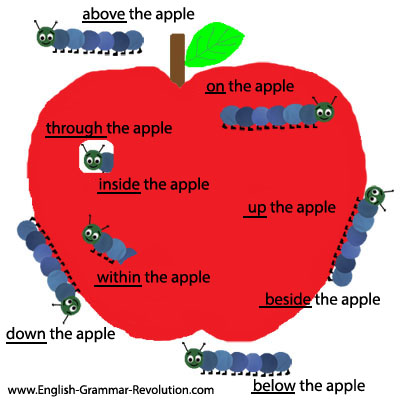
My back hurts from hauling two little bodies up and down stairs, in and out of carseats and strollers, moving them on and off my back, helping down from the high play structure when they're scared, away from the piles of dog poop all over the sidewalk where they now wander, exploring everything. I am a walking preposition chart.

But that doesn't mean I completely turned off my teacher-brain for the summer. Time away from the classroom is often the best time to think about the classroom—without the pressure of the schedule, the grading, the commuting, I was able to think about the big picture and what I want students to get out of their time in my classes.

I do a lot of reading these days about nurturing kids—providing the seeds for happiness, confidence, etc. When I have the time to digest what I doing at home and reflect on what I've been reading and doing in my professional life, I can see how the two can intertwine in a meaningful way. 

Last fall, we began the year as a faculty by discussing Carol Dweck's work on mindsets. If you're not familiar with her work, here's a brief definition from her website: 

In a fixed mindset, people believe their basic qualities, like their intelligence or talent, are simply fixed traits. They spend their time documenting their intelligence or talent instead of developing them. They also believe that talent alone creates success—without effort. They’re wrong.

In a growth mindset, people believe that their most basic abilities can be developed through dedication and hard work—brains and talent are just the starting point. This view creates a love of learning and a resilience that is essential for great accomplishment. Virtually all great people have had these qualities.

I haven't read all of Dweck's book, but the gist of what I got out of the discussions in September was the idea of encouraging effort, not achievement (though achievement often follows from effort). And then the school year started and I went back to work and thought I would go crazy just trying to keep up with the grading and prepping and not sleeping and being present with my students, my children, my husband, my self. So I kind of forgot about Dweck. At the same time, Dash and Nick were starting to, you know, do stuff. Like crawling and playing and walking and stuff. And suddenly, I had these little people who had strong feelings about things. And that's when I found RIE


The basic principles of RIE are treating babies and toddlers with respect for their individual feelings, needs, and wants while cultivating appropriate boundaries when necessary—provide a safe space for babies to move and learn in, and they will move and learn with confidence and competence. Communicating with our children in a respectful way about what the boundaries and rules are and are not frees them to explore their world. And I've seen for myself how amazingly effective this practice is. I've become the unhelpful mommy on the playground; if they can't get on it themselves, they can't do it (Except for swings. Because swings are so fun.)

As the boys get older, we do have to set more boundaries and encourage positive behaviors. So we turn to Positive Discipline to get to the core of why they want to hit each other (which they don't often do), and work on empathizing with them instead of yelling. It is so hard not to get what you want, and it's even harder when you're unable to articulate what you want and why you're frustrated. It must be even more frustrating if your mom responds by yelling at you and telling you to stop crying because big kids don't need to cry.

What does all this have to do with teaching? Or with Carol Dweck? A growth mindset is all about recognizing where you are and being willing to be frustrated and keep trying, especially when you're learning something new or unfamiliar. I want to try to bring the same empathy I practice with my kids to my classroom. I want to meet students where they are and understand what's frustrating about a tough text, and celebrate what's great about understanding a tough text. And I want to give them the tools for expressing both their frustration and their understanding in a meaningful way.

What does this mean in practice? This year, I'm teaching a new course, "The Examined Life," which focuses primarily on the process of reading and thinking; it's about writing, too, but I've decided to toss out the usual English class writing rubrics and structures and ask my students not to write "English papers," but instead to write papers in which they grapple authentically with ideas of their own, in their own words. The first paper is about their beliefs about how to live; they will help write the prompts for the next couple of papers. They wrote the course expectations, too—and here's where the practices of RIE and Positive Discipline come in, at least as I see it: learning is hard, whether you're a toddler or a teenager. Giving some boundaries provides kids and students with a sense of security (gates, a regular bedtime; reading assignments, class structures). Freedom to explore within those boundaries helps them (us) learn our limits and, I hope, strive to stretch them further.


Thursday, April 26, 2012

On Teaching Huckleberry Finn

Source: http://www.shmoop.com/images/teachers_editions/huck-finn.jpg
All modern American literature comes from one book by Mark Twain called Huckleberry Finn. American writing comes from that. There was nothing before. There has been nothing as good since. (Ernest Hemingway)


I just finished teaching Huckleberry Finn. As part of our time studying Huckleberry Finn, my class watched "Born to Trouble," a PBS documentary produced in 2000 about the controversy involved in teaching Huckleberry Finn. I was particularly struck this time around by something Jocelyn Chadwick-Joshua asks: "When did we decide that learning has to be painless?" When I first encountered Huck and Jim as a high school student, I felt offended every time I saw the word "nigger." I felt personally scarred. To be honest, I don't remember what, if anything, my teacher did to address the presence of the n-word in the book we were reading. I do know that when I started teaching Huck Finn three years ago I decided that the first thing I needed to do was tell my students what my experience was as a high-school reader of the text. Painful, yes. And in some ways it still is. The word hasn't lost its force. But Chadwick-Joshua and many of the other scholars who speak in the documentary argue that banning or bowdlerizing Huck Finn means taking one of its primary lessons away, and I'm right with them. The pain of seeing the n-word 218 times forces us to examine the power of words.

In his introduction to a recent edition of Tom Sawyer and The Adventures of Huckleberry Finn that does away with the n-word, Alan Gribben suggests that learning shouldn't in fact be painful:
I believe that a significant number of school teachers, college instructors, and general readers will welcome the option of an edition of Twain’s fused novels that spares the reader from a racial slur that never seems to lose its vitriol. Despite occasional efforts of rap and hip hop musicians to appropriate the term, and well-meaning but usually futile (from my own experience) endeavors by classroom teachers to inoculate their students against it by using Huckleberry Finn as a springboard to discuss its etymology and cultural history, the n-word remains inarguably the most inflammatory word in the English language.
I disagree with Gribben that the purpose of discussing the n-word is to "inoculate students against it." We start off each term's exploration of Huck Finn with a 70 minute discussion of the n-word. Only a few minutes of that conversation are devoted to its etymology. The purpose of discussing the n-word is to bring to the surface the pain, awkwardness, discomfort, and tension that encountering the word creates in both my students and me. I asked this year's students to describe how they felt during our initial n-word conversation. They mentioned feeling antsy, having a sense of hesitation, fear, or caution; many of the white students said that they noticed their whiteness more and felt separated or ashamed.  I asked whether there were any positive feelings about the conversation and they came up with the following words: insightful, important, boundary-pushing, good for learning, revealing, enlightening, necessary.

We have to consider such conversations to be mere starting points for further discussion, of course—after all, the purpose of education isn't to make us comfortable or complacent, but rather to encourage us to think for ourselves and question the world. What better way to do so than by directly confronting what Gribben rightly calls "the most inflammatory word in the English language"? Our lives are complex and difficult—avoiding the pain language evokes doesn't help us get better at contending with offensive, complex language (and avoiding the n-word while reading Huck Finn doesn't mean that you'll avoid seeing it rear its ugly head elsewhere: witness the reaction to last night's Washington Capitals win, for example). 

In addition to our n-word discussion this year, we spent a day talking about the new edition and whether it would have been a preferable text to read. In preparation for that discussion, we read Toni Morrison's introduction [PDF]  to Huck Finn from 1996, Gribben's introduction to this new edition, and a brief piece from Shelley Fisher Fishkin on the new edition. We also watched a brief segment featuring Melissa Harris-Perry on MSNBC's Countdown.The consensus among the class was that the book should be read as is, even in high schools, though it must be done with time to talk about the n-word. My students brought up the example that Gribben cites below as one instance in which "slave" is an insufficient replacement for "nigger":
The synonym “slave” expresses the cultural racism that Twain sought to convey, as in Huck Finn’s report to Aunt Sally Phelps in Chapter 32 that a steamboat explosion had “killed a slave,” to which she responds heartlessly, “Well, it’s lucky; because sometimes people do get hurt.”
As my students pointed out, the distinction here is between a "nigger" and a "person," not between someone who has been enslaved and a free person. But we could see how Gribben might be able to finesse his point by saying that the distinction between "slave" and "people" is exactly the same distinction. But in another passage, his replacement of the n-word with "slave" shifts the tone and meaning of the passage:
 "Oh, yes, this is a wonderful govment, wonderful. Why, looky here. There was a free nigger there from Ohio -- a mulatter, most as white as a white man. He had the whitest shirt on you ever see, too, and the shiniest hat; and there ain't a man in that town that's got as fine clothes as what he had; and he had a gold watch and chain, and a silver-headed cane -- the awfulest old gray-headed nabob in the State. And what do you think? They said he was a p'fessor in a college, and could talk all kinds of languages, and knowed everything. And that ain't the wust. They said he could vote when he was at home. Well, that let me out. Thinks I, what is the country a-coming to? It was 'lection day, and I was just about to go and vote myself if I warn't too drunk to get there; but when they told me there was a State in this country where they'd let that nigger vote, I drawed out. I says I'll never vote agin. Them's the very words I said; they all heard me; and the country may rot for all me -- I'll never vote agin as long as I live. And to see the cool way of that nigger -- why, he wouldn't a give me the road if I hadn't shoved him out o' the way. I says to the people, why ain't this nigger put up at auction and sold? -- that's what I want to know. And what do you reckon they said? Why, they said he couldn't be sold till he'd been in the State six months, and he hadn't been there that long yet. There, now -- that's a specimen. They call that a govment that can't sell a free nigger till he's been in the State six months. Here's a govment that calls itself a govment, and lets on to be a govment, and thinks it is a govment, and yet's got to set stock-still for six whole months before it can take a hold of a prowling, thieving, infernal, white-shirted free nigger...
Pap Finn's rant from Chapter 6 is crucial to our understanding of Pap as a hypocritical, racist, unsympathetic character. Perhaps we cheer a little when we find out at the end of the novel that he is dead. Perhaps not. Either way, it is clear that Twain knows exactly what kind of person his readers will understand Pap to be. Consider this brief excerpt from the passage above if we replace "nigger" with "slave":
Thinks I, what is the country a-coming to? It was 'lection day, and I was just about to go and vote myself if I warn't too drunk to get there; but when they told me there was a State in this country where they'd let that slave vote, I drawed out. I says I'll never vote agin. Them's the very words I said; they all heard me; and the country may rot for all me -- I'll never vote agin as long as I live. And to see the cool way of that slave -- why, he wouldn't a give me the road if I hadn't shoved him out o' the way. I says to the people, why ain't this slave put up at auction and sold?
The passage loses its force entirely; indeed, it doesn't make any sense, because Pap is explicitly talking about a black person who is not, in fact, a slave.

A further complication to Gribben's argument is the subtlety of Huck's development in the novel. Huck is a flawed protagonist—he grows and learns over the course of the novel, but he is infuriatingly silent in many places (as Toni Morrison has pointed out). Many of the 218 uses of the n-word in the novel come from Huck's mouth (cf. Louie C.K. on Huck). But in two places Huck does not refer to Jim as a "nigger," and those two places stand out even more because they are so unusual.

The first is when Jim stays to watch over the injured Tom Sawyer at the end of the novel, after Jim has been "freed" by Tom and Huck. Because of his willingness to risk his freedom for Tom's sake, Huck declares that he "knowed [Jim] was white inside" (365). For Huck, this is progress, though such a compliment wouldn't (and shouldn't!) be acceptable these days.

The second, and more poignant, moment comes when Huck hears the doctor's account of Jim's behavior while the two of them tended to Tom's wounds. The doctor's speech has been freely peppered with the n-word, even though he is arguing that the townsfolk should treat Jim kindly—by my count, "nigger" appears 10 times in the speech. Huck feels relieved by the doctor's speech, and tells us that he "thought [Jim] had a good heart in him and was a good man the first time I see him" (378). This is the only moment in the novel in which Huck refers to Jim as a man. Would the effect of this exception be so potent if Jim had been referred to as a "slave" throughout the novel? I doubt it. Our eyes can slide over the word slave. But "nigger" jumps off the page and sears our consciousness, as does its absence in this instance.

I wish I could say that teaching The Adventures of Huckleberry Finn is always satisfying—in many ways, it is an incredibly frustrating book because Huck is flawed. While he grows to realize that Jim is a good human being (as we readers have known all along), he doesn't extend that understanding to all black folks. In fact, he forgets about Jim's humanity and goes along (albeit grudgingly) with Tom's plans for much of the last several chapters. Yet a flawed protagonist is in many ways a better foil for our smug sense of superiority as modern-day readers. We, too, would do well to examine our assumptions about how we judge and classify others. Do we, like Huck, make exemptions for individuals? Or do we, like Jim, let our better impulses rule even if it means risking our own self-interest?

[Note: I began writing this blog post about three days before the twins made their appearance in January 2011; at the time, all sorts of media were carrying the story of Gribben's new edition of The Adventures of Huckleberry Finn. I think this piece has probably taken longer to finish than any other piece of writing I have ever done, with the exception perhaps of my Master's thesis. Maybe.]


Wednesday, July 18, 2007

Summer Blogging


What has me writing today is the thought that school starts in about 6 weeks, and I have a ton of ideas to process before it starts. I'm teaching three different classes next year: in the fall, I will be teaching English I and English II; in the spring, I will be teaching English I and a yet-to-be-titled seminar. This will be my second year as a high-school teacher; I have been reflecting on my experience as a first-year teacher and hope to improve upon last year's performance.

I've spent a lot of time thinking about grammar this summer. I'm working on a grammar manual for the sophomores with one of my colleagues. Our English II grammar program is in desperate need of an overhaul -- the book we have been using is out-of-date and doesn't provide enough explanations. So we've been writing up a bunch of explanations. Now I'm putting off creating practice sentences. From what I understand, the grammar modules of English I and English II at my school were developed independently of the literature components; only later (and long before my arrival at the school) were they coalesced into one course. This combination has left a gap between learning grammar and applying it to writing. I'm thinking about asking my students to look at grammar not as some awful other thing, but as necessary for good writing.

But what other real-world applications can we find for grammar? It is easy to explain in terms of a foreign language: if you do not know the grammar, you will not be able to communicate effectively. Why is this a difficult idea to get across to native speakers (particularly 14-year-old native speakers)?

I'm also spurred to consider these ideas by reading Understanding By Design. Dana Huff's excellent blog turned me on to this book this summer (check out her "reading journal" for UbD here), and while I've been reading only very slowly, I can see that Wiggins and McTighe have a great system. The kinds of questions they ask us to consider are exactly the sorts of things I have been wanting to ask my colleagues over the last year: To what end are we reading the books we're reading? What do we want the kids to get out of our classes? How can we make the readings and assignments relevant?

I'm hoping to join the UbD Educators wiki with some lesson plans, as soon as I finish reading the book. I'm particularly interested in figuring out some grammar-related plans for the freshmen and sophomores.