Thursday, October 11, 2012

No Time?

Kinds of blue

I have writer friends who say they don't have time to write. Yet they have time to post on Facebook about not having time to write, time to post Instagram photos of the food they're eating in restaurants, time to eat in restaurants. Time is something much on my mind these days. I can see hints in my toddlers' movements of the little boys they will become. Sometimes, in the right light, I can see the men they will one day be.

Let's check out the "yocks" over there!
Time moves too fast, so often. Here's something I want to tell my friend (and my students!) about time and about writing: I don't have time to write, either. I need that time to delight in the amazingness that is two growing boys. I need that time to grade papers, to buy groceries, to run, to do yoga. Whole weeks, months sometimes, go by without my sitting down for an hour or two to compose my thoughts. But I still think of myself as a writer. Eventually, some of the ideas I jot down here and there will get refined, between the laundry and bedtime, between the papers and prepping, between the breaths. This is what it means to me to be a writer. If I waited until I had time to write, I'd never write a single word.

My job takes up most of my non-toddler time. I can't seem to find the focus or space I need in order to grade at home—there's the possibility that someone will wake up at naptime, or at night I zone out by mindlessly surfing Facebook or watching Tremé. So I go to a café near the UC Berkeley campus that stays open late. Two rooms of tables are packed with folks mostly working, heads bent over laptops, textbooks, or stacks of papers. I walk in, and I'm transported back to my days as a graduate student, when I could count on running into my friends at our favorite coffee shop or the library's café. We'd grade companionably, or read for seminars while gossipping. I loved the texts I was studying in school, but even more than that, I loved those long days and nights spent sipping coffee and working, the sense that we all belonged to the peculiar tribe of people who spend Saturday nights grading papers and reading books. Now, I hurry home by 9:30 instead of staying out until the library closes and heading out to dance afterward. But the café gives me the illusion for those two hours that I have turned the clock back, that I am back with my tribe. 

I am editing this piece while the boys nap. It's risky. I suppose that I could also be doing something else—watching a show, reading yet another parenting book, working on college recommendation letters. And all of those things will be done in time too. But right now I have more interest in wringing these thoughts out, so I can move on and think of something else. I choose to write. Maybe my friends who say they don't have time to write simply choose to do something else.

Spending some time watching paint dry. Literally.

Thursday, September 27, 2012

Waking Up


My class read an excerpt from the opening of Proust's Remembrance of Things Past for today's discussion. As a prelude to the discussion, we're writing about waking up. Here's my contribution:

I am startled out of my dream. I still see the waves closing over a spit of sand, the tide coming in. I was on an island, desperately trying to preserve some books (from what? I'm not sure) by slinging reusable grocery bags over my shoulders. I was holding the hand of someone tall, lanky, and blond. The waves rolled over us; we were underwater. I surfaced, with bags but no books. Climbed to the town on higher ground, still seeking the weighty load that had vanished under the sea. Darkness. Then I notice the edges of the curtains and the glow of the light outside. I swim out from the sea into my room. I am warm, sweating. My husband slumbers and snores next to me. I hear the BART train whoosh by with its ghostlike howl. What woke me up? The children are silent. It is four fifty-five, the glow of my clock tells me. For a week we've been waking up at four fifty-five. But no one is crying this time. I want to pull the covers over my head, go back to sleep, not start the day just yet. I roll over, hoping to find the waves, the shore, the books again.

Friday, September 7, 2012

Intersections


I started this post in June. And I'm finally finishing it just as school starts up again. While I was on "vacation," instead of teaching for a few hours, commuting an hour each way, and grading papers and prepping from after the kids go to bed until I go to bed, I spent my days at the park, on the way to the park, or on the way home from the park, feeding children, changing diapers, reading books. You know, mom stuff.

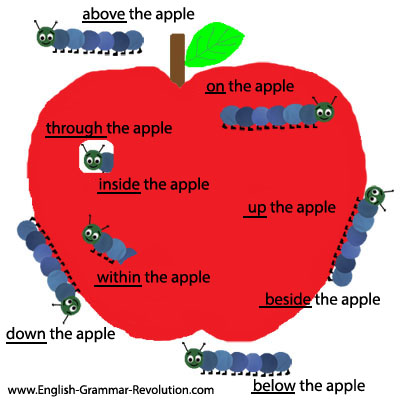
My back hurts from hauling two little bodies up and down stairs, in and out of carseats and strollers, moving them on and off my back, helping down from the high play structure when they're scared, away from the piles of dog poop all over the sidewalk where they now wander, exploring everything. I am a walking preposition chart.

But that doesn't mean I completely turned off my teacher-brain for the summer. Time away from the classroom is often the best time to think about the classroom—without the pressure of the schedule, the grading, the commuting, I was able to think about the big picture and what I want students to get out of their time in my classes.

I do a lot of reading these days about nurturing kids—providing the seeds for happiness, confidence, etc. When I have the time to digest what I doing at home and reflect on what I've been reading and doing in my professional life, I can see how the two can intertwine in a meaningful way. 

Last fall, we began the year as a faculty by discussing Carol Dweck's work on mindsets. If you're not familiar with her work, here's a brief definition from her website: 

In a fixed mindset, people believe their basic qualities, like their intelligence or talent, are simply fixed traits. They spend their time documenting their intelligence or talent instead of developing them. They also believe that talent alone creates success—without effort. They’re wrong.

In a growth mindset, people believe that their most basic abilities can be developed through dedication and hard work—brains and talent are just the starting point. This view creates a love of learning and a resilience that is essential for great accomplishment. Virtually all great people have had these qualities.

I haven't read all of Dweck's book, but the gist of what I got out of the discussions in September was the idea of encouraging effort, not achievement (though achievement often follows from effort). And then the school year started and I went back to work and thought I would go crazy just trying to keep up with the grading and prepping and not sleeping and being present with my students, my children, my husband, my self. So I kind of forgot about Dweck. At the same time, Dash and Nick were starting to, you know, do stuff. Like crawling and playing and walking and stuff. And suddenly, I had these little people who had strong feelings about things. And that's when I found RIE


The basic principles of RIE are treating babies and toddlers with respect for their individual feelings, needs, and wants while cultivating appropriate boundaries when necessary—provide a safe space for babies to move and learn in, and they will move and learn with confidence and competence. Communicating with our children in a respectful way about what the boundaries and rules are and are not frees them to explore their world. And I've seen for myself how amazingly effective this practice is. I've become the unhelpful mommy on the playground; if they can't get on it themselves, they can't do it (Except for swings. Because swings are so fun.)

As the boys get older, we do have to set more boundaries and encourage positive behaviors. So we turn to Positive Discipline to get to the core of why they want to hit each other (which they don't often do), and work on empathizing with them instead of yelling. It is so hard not to get what you want, and it's even harder when you're unable to articulate what you want and why you're frustrated. It must be even more frustrating if your mom responds by yelling at you and telling you to stop crying because big kids don't need to cry.

What does all this have to do with teaching? Or with Carol Dweck? A growth mindset is all about recognizing where you are and being willing to be frustrated and keep trying, especially when you're learning something new or unfamiliar. I want to try to bring the same empathy I practice with my kids to my classroom. I want to meet students where they are and understand what's frustrating about a tough text, and celebrate what's great about understanding a tough text. And I want to give them the tools for expressing both their frustration and their understanding in a meaningful way.

What does this mean in practice? This year, I'm teaching a new course, "The Examined Life," which focuses primarily on the process of reading and thinking; it's about writing, too, but I've decided to toss out the usual English class writing rubrics and structures and ask my students not to write "English papers," but instead to write papers in which they grapple authentically with ideas of their own, in their own words. The first paper is about their beliefs about how to live; they will help write the prompts for the next couple of papers. They wrote the course expectations, too—and here's where the practices of RIE and Positive Discipline come in, at least as I see it: learning is hard, whether you're a toddler or a teenager. Giving some boundaries provides kids and students with a sense of security (gates, a regular bedtime; reading assignments, class structures). Freedom to explore within those boundaries helps them (us) learn our limits and, I hope, strive to stretch them further.